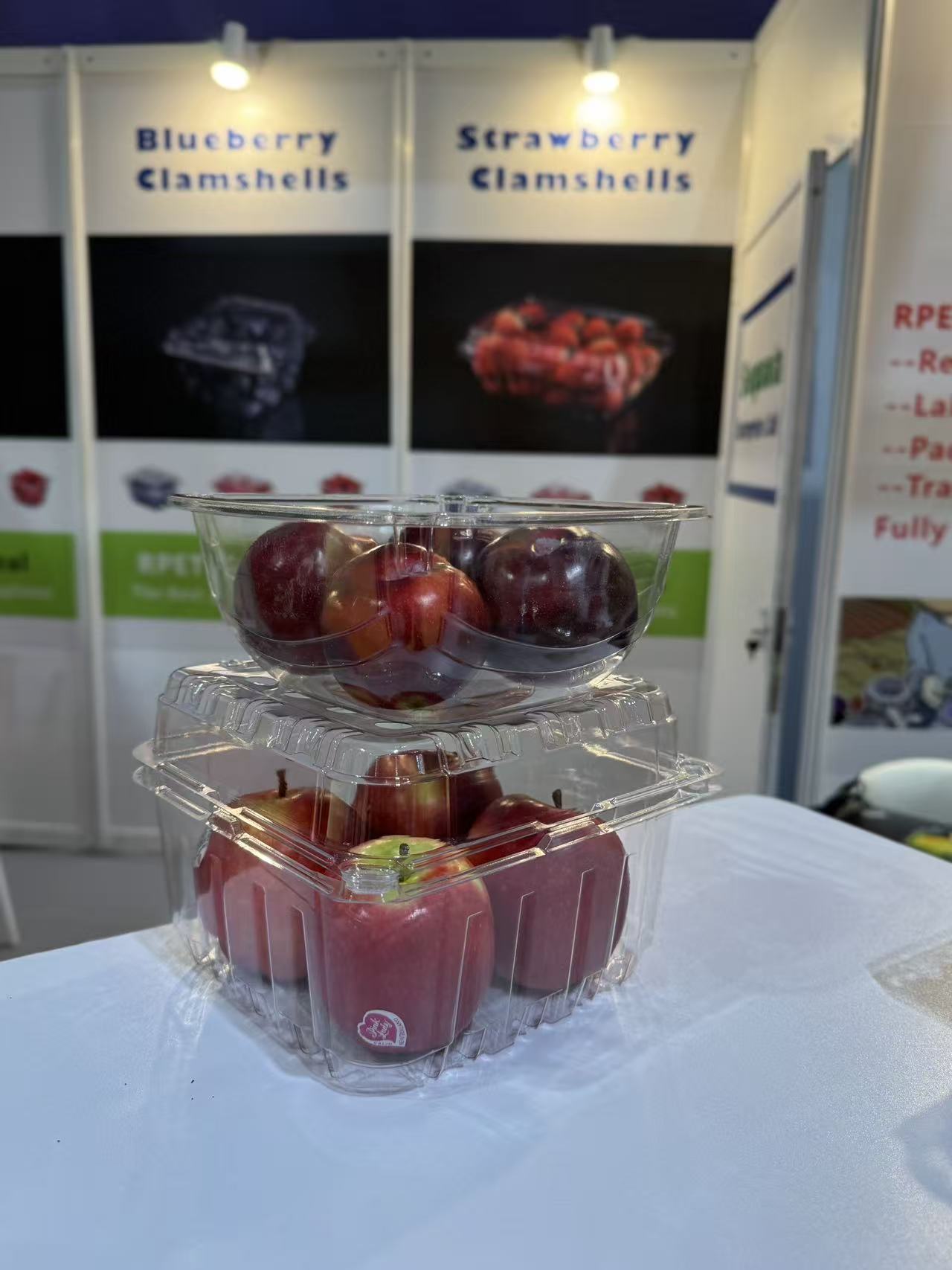
1. Food safety compliance: Ensure the PET is food-grade, BPA-free, and certified to meet target market standards (GB 4806.7, EU 10/2011, FDA 21 CFR 177.1630).
2. Material quality: Opt for virgin PET or certified PCR PET with consistent clarity, no odor, and good rigidity. Avoid recycled PET with unknown sources or inconsistent color.
3. Clarity and anti-fog: For retail appeal, choose high clarity (>90% transmittance) and anti-fog coating if used in cold environments.
4. Structural strength: Check impact resistance, stackability, and low-temperature performance, especially for cold chain use.
5. Ventilation design: Select appropriate vent hole size and pattern for your fruit type.
6. Size and weight capacity: Choose exact dimensions and weight ratings (100g, 250g, 500g, 1kg).
7. Closure security: Ensure snap-fit or hinged lids close tightly and resist popping open during transit.
8. Sustainability features: Look for PCR content options, recyclability, and minimal material usage.
9. Customization capability: Verify the supplier offers printing, embossing, tinting, and custom mold services.
10. Supplier reliability: Evaluate production capacity, lead times, quality control processes, and after-sales support.
By prioritizing these factors, buyers can select PET fruit boxes that balance quality, safety, presentation, compliance, sustainability, and cost.