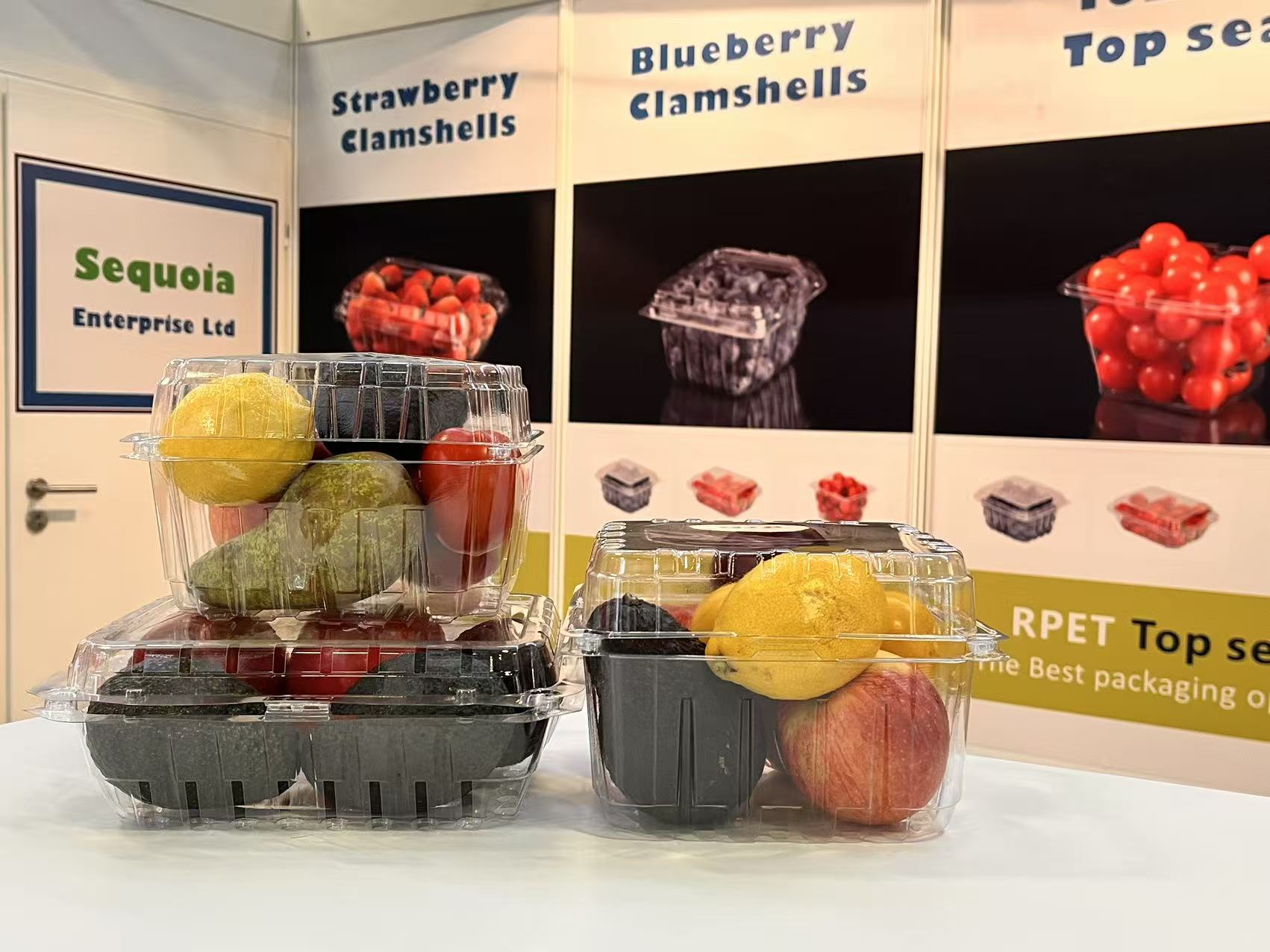
Clamshells are commonly thermoformed and may include features such as snap closures, ventilation holes, stacking rims, and labeling areas. These design elements are tailored to the specific requirements of different fruit categories—from delicate berries to sturdy stone fruits. The container is one single unit split into two halves joined by a hinge.
The widespread adoption of clamshell packaging is driven by multiple factors. First, it provides superior product protection—fresh fruit is highly sensitive to pressure, impact, and moisture, and clamshells provide rigid structural support that helps prevent bruising, crushing, and deformation during transport and handling. Second, the enclosed design reduces direct contact with external contaminants while maintaining airflow through controlled ventilation. Third, the high transparency allows buyers and consumers to visually inspect the fruit without opening the package, increasing consumer confidence and supporting impulse purchasing at retail level.
Common applications include strawberries, blueberries, raspberries, blackberries, grapes, cherry tomatoes, cut fruit, and mixed fruit portions. As global fresh produce consumption continues to rise, clamshell packaging remains the go-to solution for retailers, exporters, and growers worldwide.