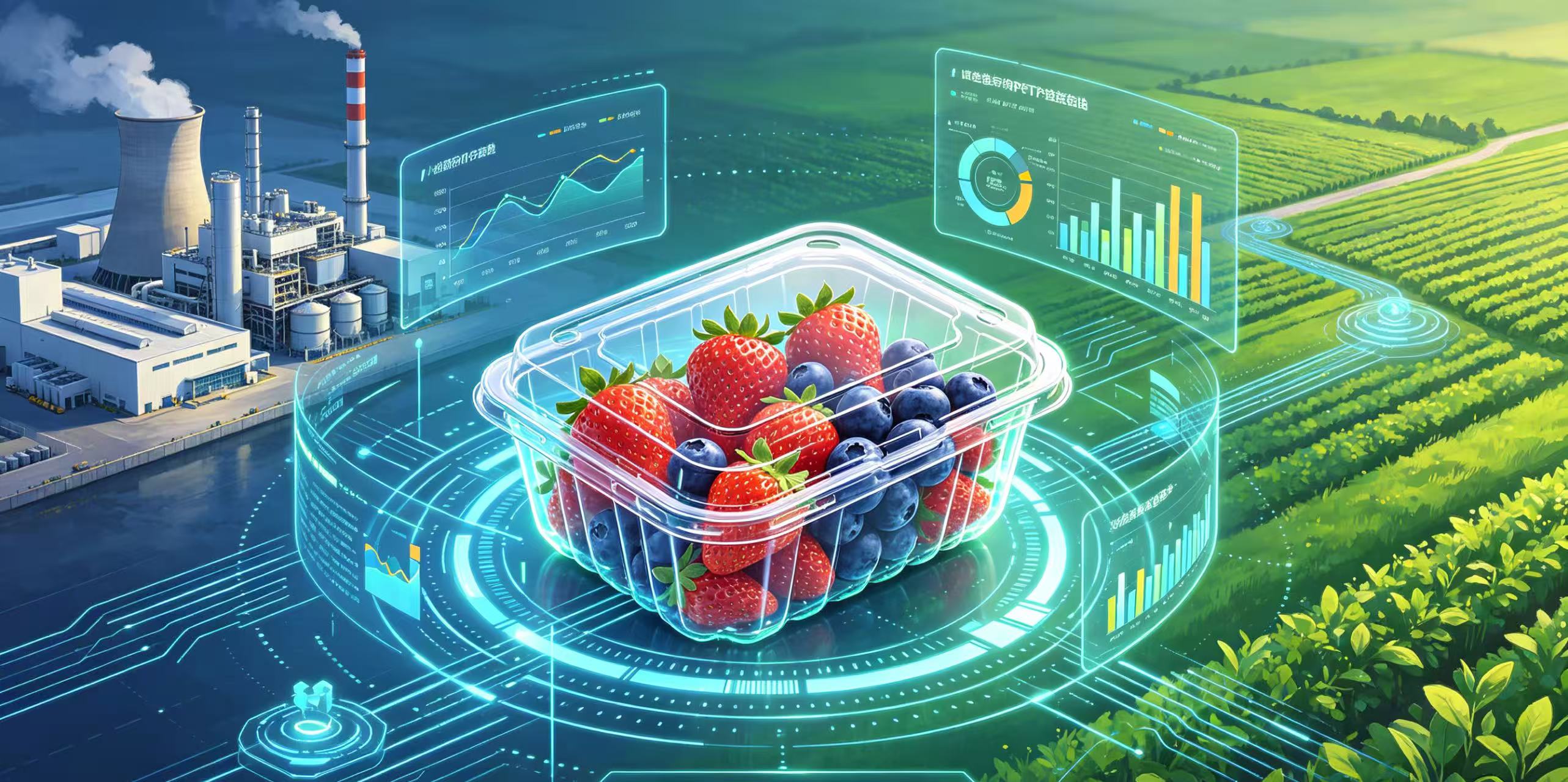
Our LCA framework quantifies emissions across raw resin production, thermoforming manufacturing, transportation logistics, in-use food waste prevention and end-of-life recycling stages. Three actionable decarbonization levers deliver proven carbon reductions for clients: first, lightweight structural redesign cutting plastic input and associated resin + transport emissions; second, increased PCR PET incorporation displacing fossil-based virgin plastic production emissions; third, factory energy optimization via low-carbon electricity procurement and high-efficiency thermoforming equipment cutting manufacturing operational carbon output.
Critical LCA data demonstrates well-engineered recyclable PET clamshells deliver superior net carbon performance vs untested fiber alternatives, because effective packaging cuts post-harvest fruit spoilage—a major emissions source given the intensive water, land and fertilizer inputs required to grow berries. We provide clients customized packaging carbon footprint reports, baseline emission calculations and step-by-step reduction roadmaps aligned with SBTi (Science Based Targets initiative) standards for corporate sustainability disclosures.
For exporters targeting carbon-conscious retail buyers and carbon-label fruit product differentiation, we also offer verified carbon offset programs to achieve declared carbon-neutral packaging status upon client request. Sequoia Enterprise integrates decarbonization thinking into every custom clamshell development project, enabling fruit producers to make evidence-based sustainable packaging decisions, meet ESG reporting requirements, and capture premium market positioning in fast-growing low-carbon fresh produce global trade.