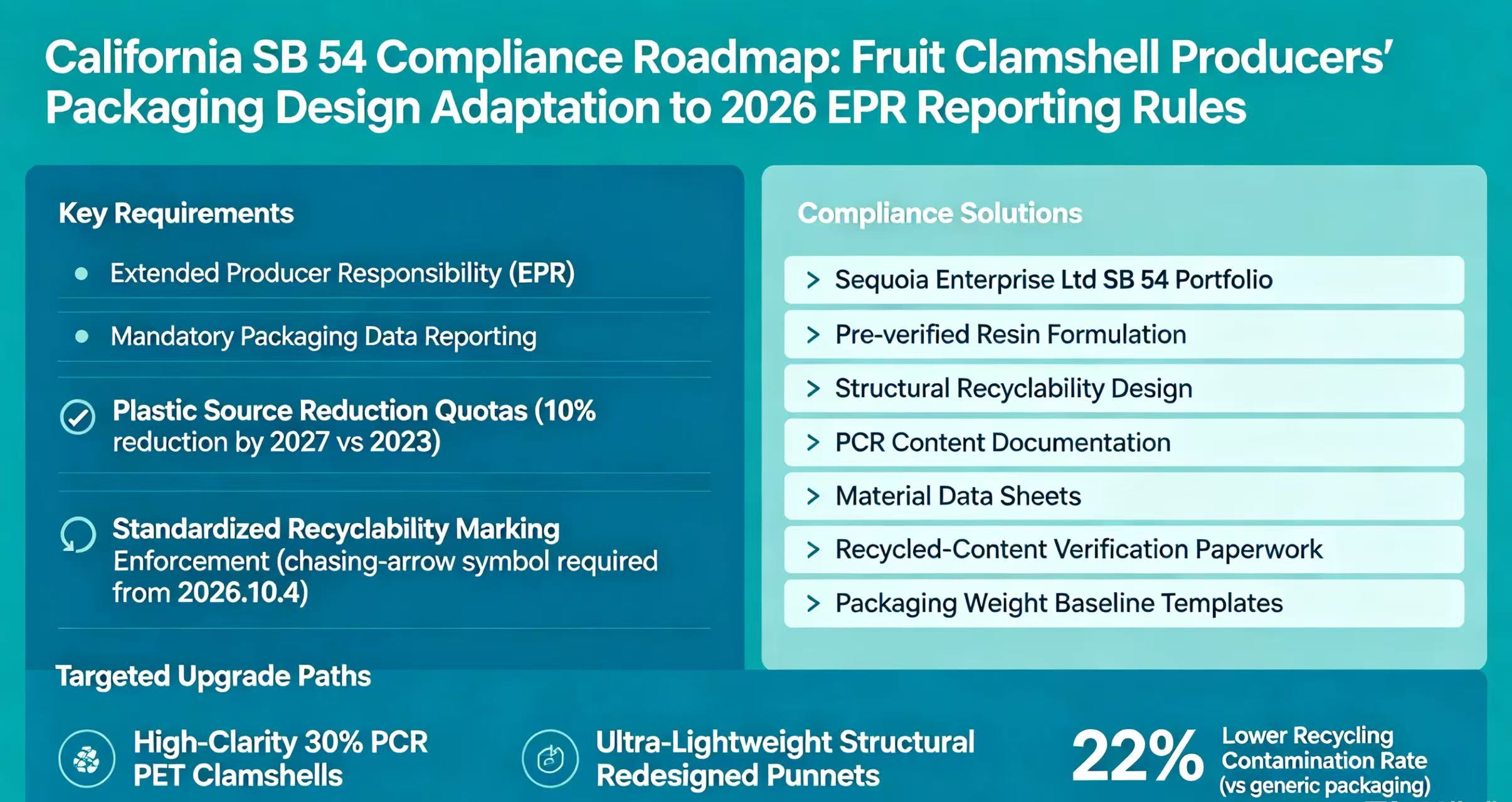
Under finalized 2026 SB 54 provisions, all plastic produce packaging must join authorized Producer Responsibility Organizations (PROs) for annual material composition reporting, achieve a 10% single-use plastic weight reduction by 2027 against 2023 baselines, and qualify for official recyclability labeling to legally display chasing-arrow recycling symbols starting October 4, 2026. Non-qualified clamshells will face shelf bans and steep eco-modulated waste management fees. Many fruit exporters previously unaware of state-level US rules now risk shipment detention and extra compliance costs.
Sequoia Enterprise Ltd has developed a full SB 54 compliant clamshell portfolio to streamline client adaptation. Our team pre-verifies resin formulation, structural recyclability design and PCR content documentation to meet CalRecycle audit standards, eliminating multilayer non-recyclable additives and optimizing hinge structure for straightforward post-consumer sorting. We provide clients with complete material data sheets, recycled-content verification paperwork and packaging weight baseline calculation templates required for PRO registration and annual reporting.
For berry packers targeting California distribution, we offer two targeted upgrade paths: high-clarity 30% PCR PET clamshells to satisfy recycled content preferences, or ultra-lightweight structural redesigned punnets to hit plastic reduction milestones. Third-party lifecycle assessment reports validate our designs reduce downstream recycling contamination rates by over 22% versus generic imported packaging. With seven US states rolling out parallel EPR legislation in 2026, proactive packaging adjustment positions fruit exporters to expand nationwide US distribution while avoiding costly regulatory delays and fines.