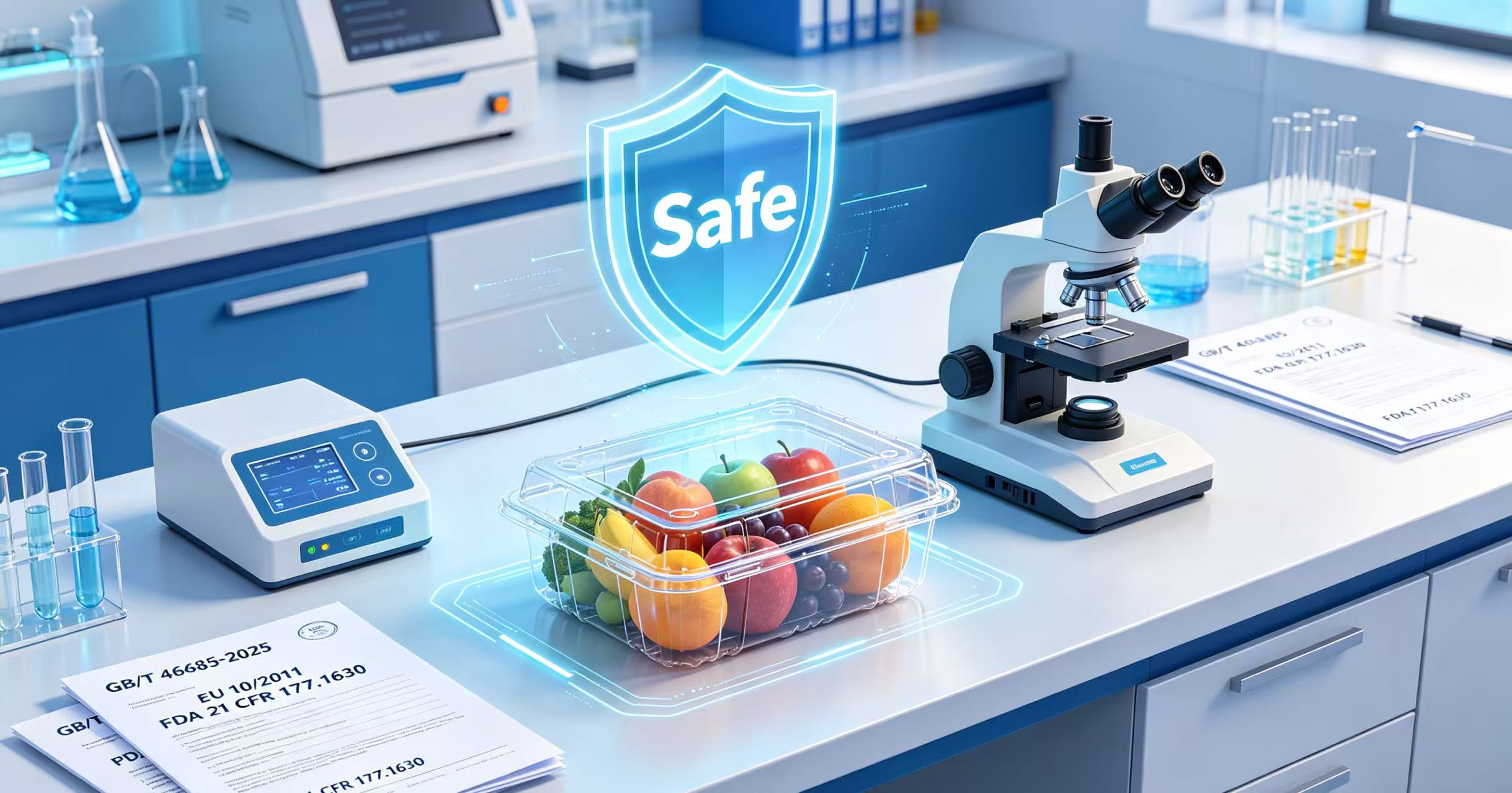
In parallel, the EU continues strict enforcement of Regulation (EU) No 10/2011 on plastic materials and articles intended for food contact, while the U.S. FDA requires all food-contact PET to comply with 21 CFR 177.1630. For fruit exporters, non-compliant packaging can result in border rejections, customs delays, or even product recalls. This year, many small and medium-sized packaging factories have accelerated upgrades in raw material traceability, production environment certification, and testing capabilities to meet global safety thresholds.
For PET fruit box manufacturers, compliance is no longer a “cost center” but a “market entry ticket.” Key actions include switching to 100% food-grade virgin PET or certified recycled PET (r-PET), printing permanent food-contact symbols on boxes, establishing batch-level traceability systems, and conducting third-party migration testing annually. As global supervision tightens, standardized, certified PET packaging will further increase market share, while low-quality, uncertified products will gradually be phased out.